okay, what is ai development?
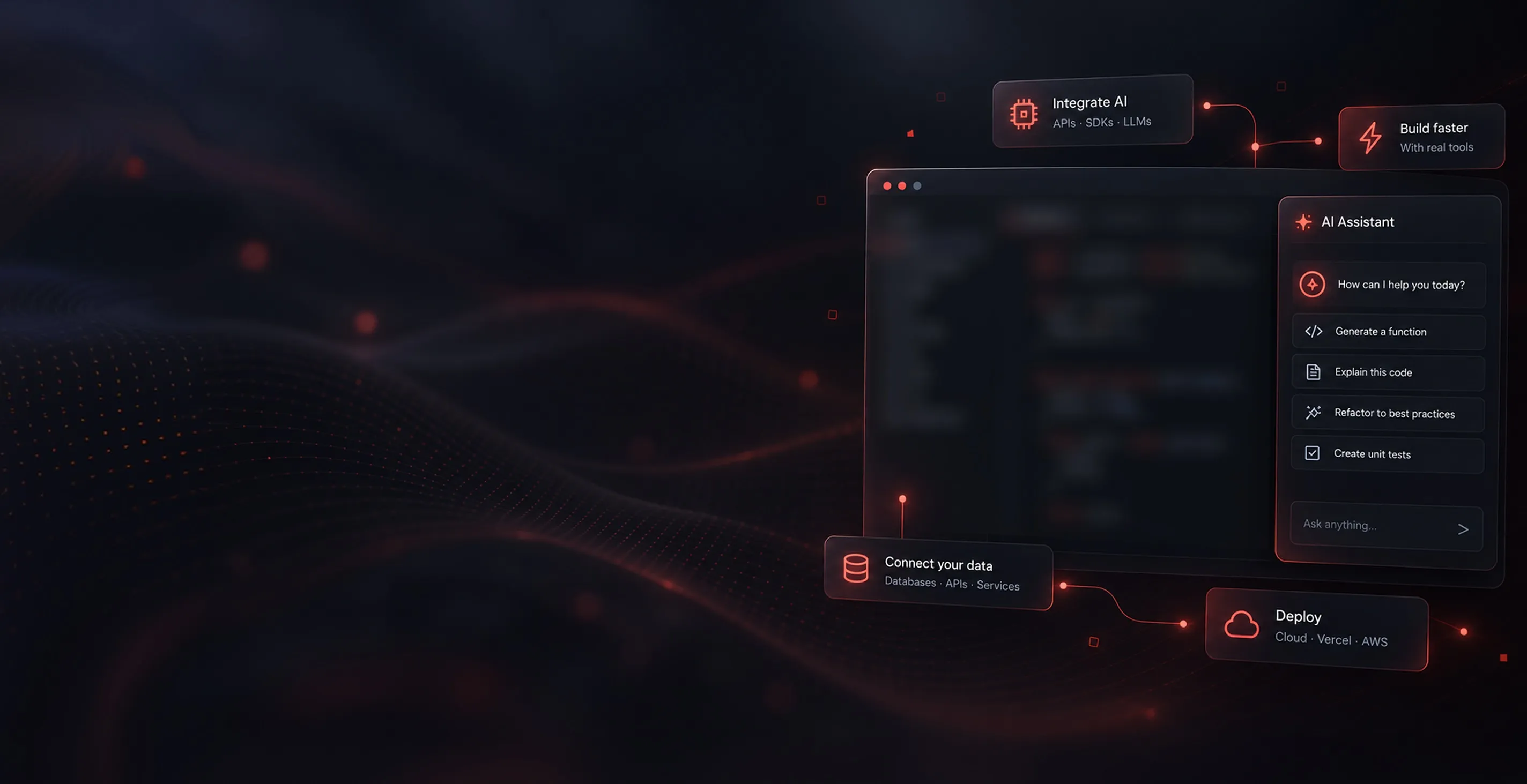
Custom AI development links to your existing workflows using APIs, event pipelines, and direct integrations with tools like your CRM, ERP, and other internal systems.
Rather than building or training AI models from scratch, we build on top of proven AI technologies and adapt them to your product and business processes.
AI development typically involves three key areas:
inside our ai software development services


AI strategy
Review your use cases and identify AI approach.

Data and RAG engineering
Prepare and structure your data for AI applications.

Model selection
Choose the best model architecture to fit your needs.

Integration
Add AI to your current systems and products.

Testing and validation
Check accuracy, bias, and performance.

Deployment and support
Launch your solution and keep an eye on its performance.
got an ai idea? let’s make it concrete

ai solutions for more than just hype
Generative AI development services create systems that generate content, code, and structured outputs when needed.
AI agent development creates systems that plan and carry out multi-step tasks such as routing, reconciliation, and orchestration.
NLP development services analyze and sort text, making search, document intelligence, and sentiment analysis much faster.
Predictive analytics development uses historical data to make estimates, such as churn risk, maintenance schedules, and inventory needs.
Conversational AI development creates support and sales assistants that use your product content, and can transfer to a human specialist when needed.
These systems personalize product, content, or service suggestions based on user behavior.
case studies

custom ai development vs off-the-shelf ai tools: how to choose
Off-the-shelf AI tools | Custom AI development |
The tasks and data involved are generic: drafting copy, transcribing calls, or tagging tickets | Your business logic and data are so specific that generic models do not work well for you |
Getting started quickly is more important than long-term ownership | You need to connect with internal systems that off-the-shelf tools cannot access |
Deep integration with internal systems is not necessary | You want to fully own your model and its architecture for the long term |
Compliance requirements are standard rather than specific to any sector | You need security and compliance controls such as data residency, audit trails, and access control |
how ai fits into your existing tech stack
Behind the build: how we develop AI
case studies

technologies we use for ai development


security, compliance and responsible ai